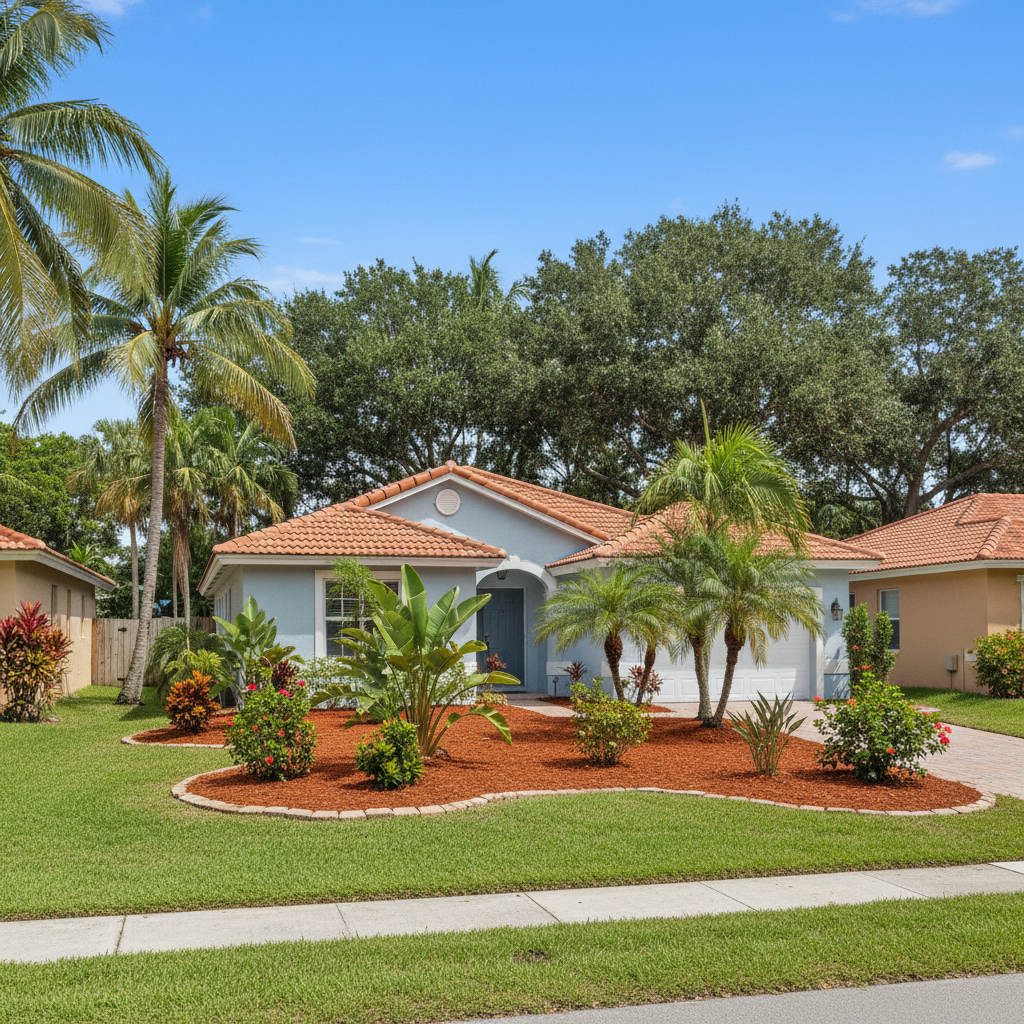
You've seen it around, right? That nice layer of wood chips or pine bark under trees and in flower beds. Most folks think it just makes things look tidy, and yeah, it does. But down here in Hialeah, with our crazy heat and sometimes unpredictable rain, mulch is doing a whole lot more than just looking good. It's actually one of the smartest things you can put in your yard, and I'm not just saying that because Israel Landscaping & Tree Services puts it in for a living.
Why Mulch is a Hialeah MVP
Let's be real, our soil isn't exactly the rich, dark stuff you find up north. It's often sandy, sometimes a bit rocky, and it drains fast. That's where mulch steps in. Think of it as a natural blanket for your plants. Here's what it's really doing:
- Keeping the water in: This is huge. The sun beats down hard here, and without mulch, water evaporates from the soil way too fast. Mulch slows that down, meaning your plants stay hydrated longer, and you don't have to water as often. That saves you money on your water bill, which is always a good thing.
- Weed control: Nobody likes pulling weeds, especially in this humidity. A good layer of mulch blocks sunlight from reaching weed seeds, so they don't sprout. The few that do pop up are usually easier to pull out. Less back-breaking work for you.
- Temperature regulation: Just like a blanket, mulch keeps the soil cooler in the summer and a bit warmer in the cooler months. This is especially important for delicate plant roots that can get stressed by our extreme temperatures.
- Nutrient boost: As organic mulches break down over time, they add valuable nutrients back into your soil. It's like a slow-release fertilizer, improving your soil structure and feeding your plants naturally.
- Erosion prevention: If you've got any sloped areas in your yard, or even just heavy downpours, mulch helps keep your soil from washing away. It absorbs the impact of raindrops and holds the soil in place.
Choosing the Right Mulch for Your Hialeah Home
There are tons of options out there, and it can get a little overwhelming. For most homes in places like West Hialeah or around Amelia Earhart Park, I usually recommend a few types:
- Melaleuca Mulch: This is a fantastic local option. Melaleuca is an invasive tree here in Florida, so using it for mulch actually helps control its spread. It's durable, breaks down slowly, and has a nice natural look. Plus, it's often more affordable because it's sourced locally.
- Pine Bark Mulch: You'll see this everywhere. It's lightweight, looks great, and breaks down at a moderate pace. It's good for acid-loving plants too, which we have a lot of down here.
- Cypress Mulch: Another popular choice, though sometimes there are environmental concerns depending on where it's harvested. It's very durable and resists rot and insects well.
- Hardwood Mulches (like Eucalyptus): These are usually a bit heavier and break down slower. They can be a good choice for high-traffic areas or if you want something that lasts a long time.
What you want to avoid is anything with dyes that bleed or really cheap, shredded pallet wood that can contain all sorts of junk. Stick to natural, organic options.
Installation: It's Not Just Dumping a Bag
You might think, “How hard can it be? Just spread it out.” And sure, you can do that. But there's a right way and a wrong way, especially if you want it to actually do its job and not cause problems. I've seen too many yards where folks pile mulch up against tree trunks like a volcano. That's a big no-no. It can trap moisture, encourage rot, and invite pests.
You want a consistent layer, usually about 2-4 inches deep. Keep it a few inches away from the base of trees and shrubs. That 'mulch ring' around a tree should look more like a donut, not a volcano. And before you lay it down, make sure the area is clean of weeds and debris. You're trying to suppress weeds, not give them a cozy blanket.
Why Local Expertise Matters for Mulch
Look, you can buy mulch at any big box store. But knowing what works best for our specific climate, our soil, and even the types of plants common in Hialeah neighborhoods? That's where local knowledge comes in. We know which mulches hold up best against our summer downpours, which ones are going to attract the wrong kind of bugs, and how to install it so it actually benefits your landscape, not harms it.
We also know the best places to source quality mulch that's not going to break the bank. If you're looking to refresh your landscape, save water, and give your plants a better shot at thriving in our South Florida environment, give us a call at Israel Landscaping & Tree Services. We'll get you set up right.